BEFORE & AFTER
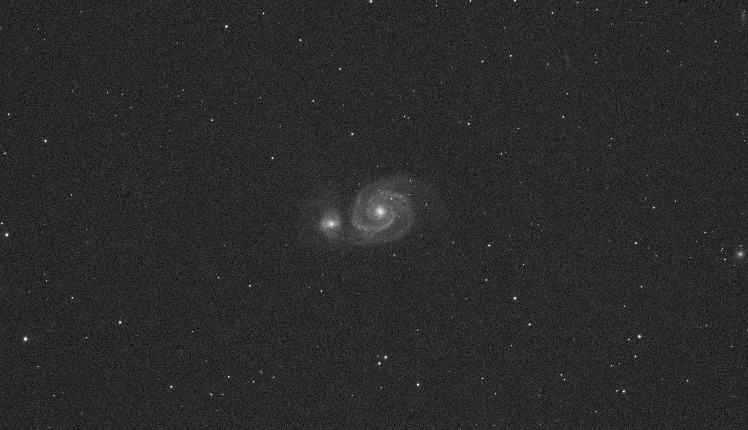
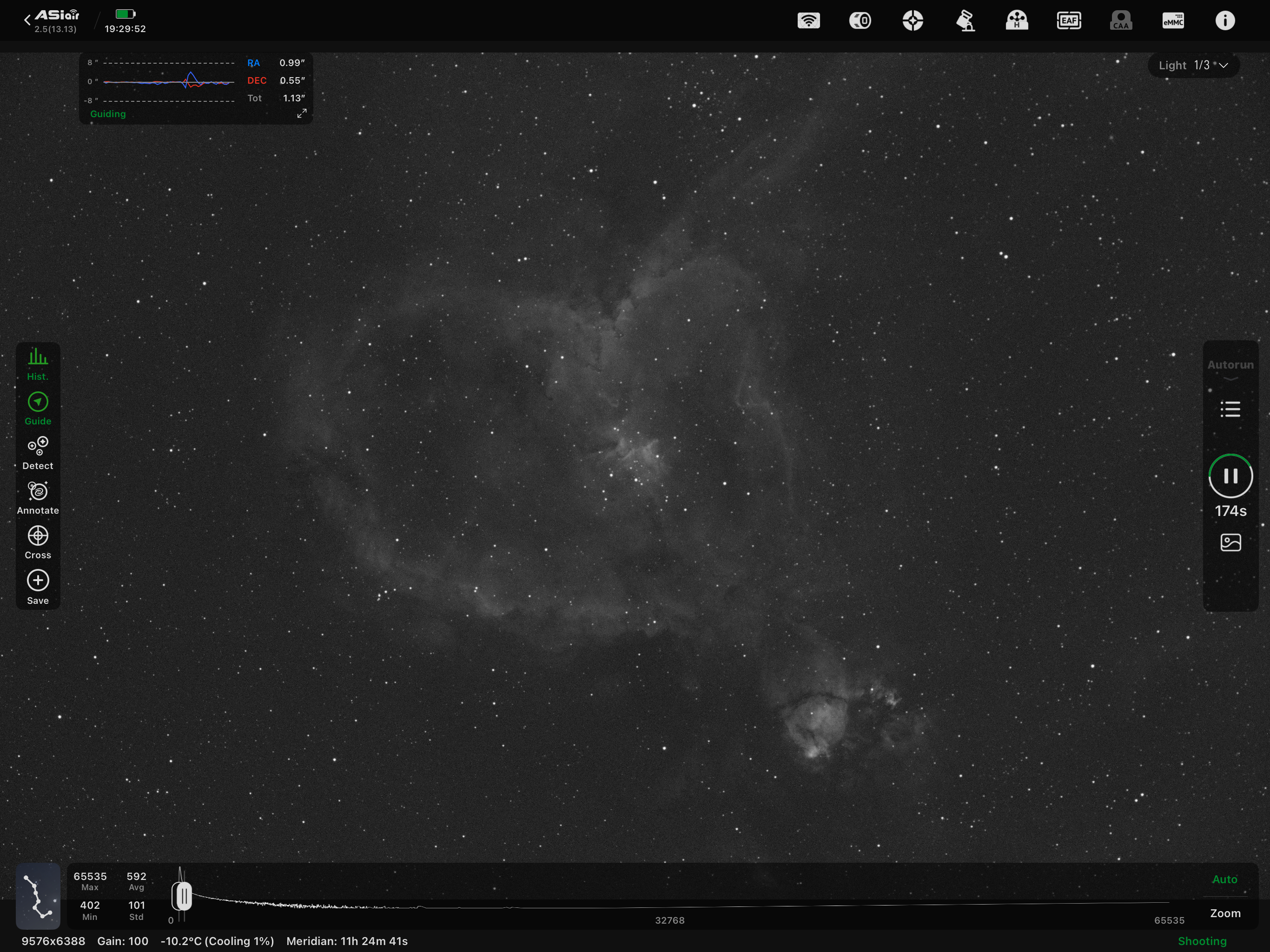
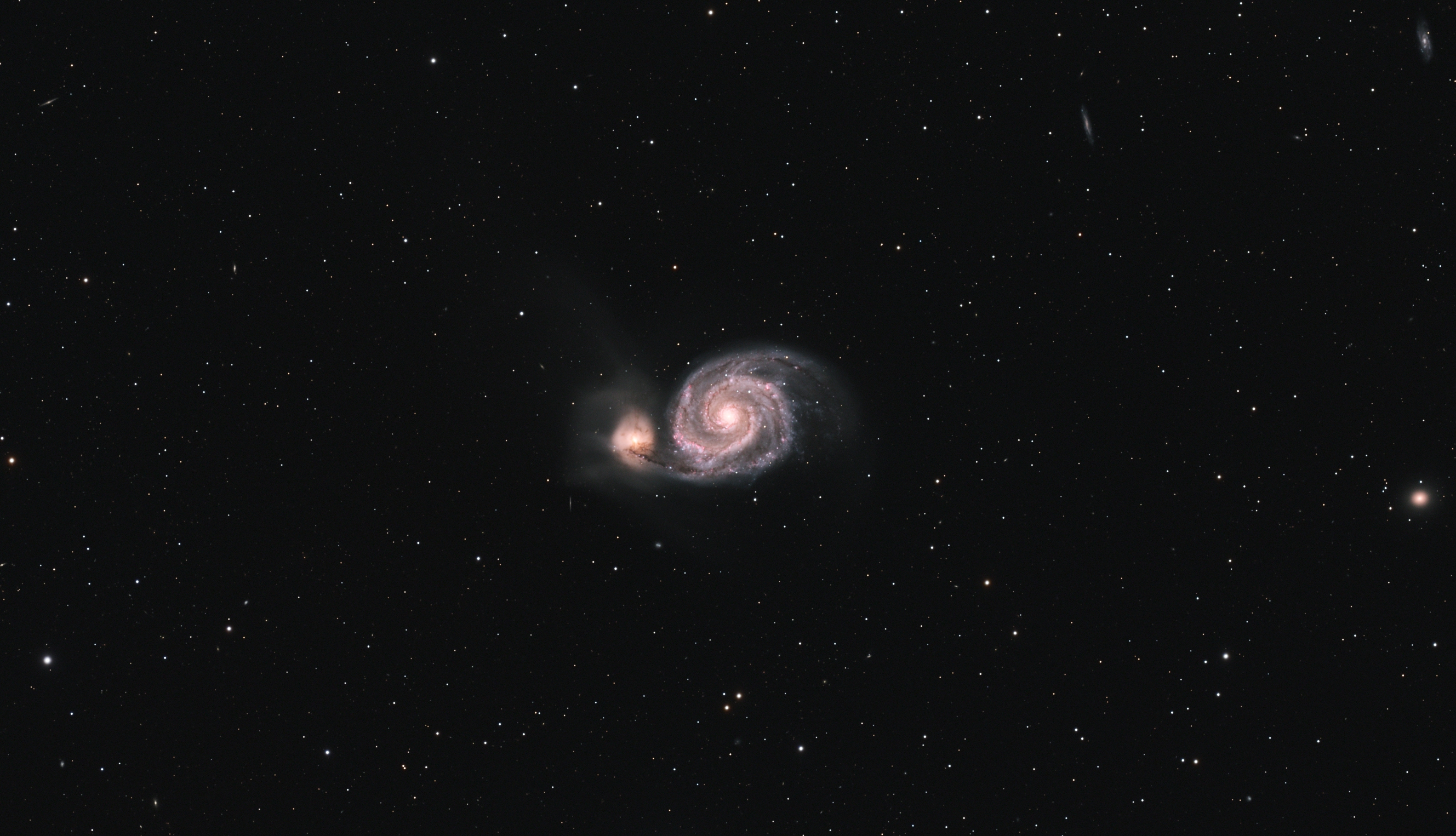
The gap between a single raw sub-exposure and the final processed image is enormous. These comparisons show the transformation — from faint, noisy signal to structured, colorful deep sky portraits.
WHIRLPOOL GALAXY M51 · LRGB
M51 — final M51 — raw
SINGLE SUB
FINAL
HEART NEBULA IC 1805 · SHO
Heart Nebula — final Heart Nebula — raw
SINGLE SUB
FINAL
THE PROCESS
From planning to final render, each image passes through a meticulous workflow designed to extract the faintest signal from the noise of the cosmos.
01
PLANNING & TARGET SELECTION
Every session starts with careful planning. Target altitude, moon phase, meridian transit time, and weather forecasts determine what can be imaged on a given night. Tools like Stellarium and Telescopius help visualize framing and confirm that the target clears local obstructions.
Stellarium Telescopius Clear Outside
02
EQUIPMENT SETUP & ALIGNMENT
The mount is polar-aligned to sub-arcminute accuracy. The optical train — telescope, filter wheel, camera — is assembled and cooled to -10°C. Autofocus is achieved via a Bahtinov mask or automated routine. Guiding calibration locks onto a reference star.
Polar Alignment Autofocus PHD2 Guiding
03
DATA ACQUISITION
The camera captures hundreds of individual exposures — typically 300 seconds each through narrowband filters (Ha, OIII, SII). A single target might accumulate 20+ hours of total integration time across multiple nights. Every frame is autoguided to keep the target locked at sub-pixel precision.
N.I.N.A. 300s Subs 3nm Narrowband
04
CALIBRATION & STACKING
Raw frames are calibrated with darks, flats, and bias frames to remove sensor noise, optical vignetting, and dust artifacts. The calibrated subs are registered (aligned) and stacked using sigma-clipping to reject satellites, planes, and cosmic rays. What remains is pure signal.
WBPP Sigma Clipping Drizzle Integration
05
PROCESSING & COLOR MAPPING
The stacked master is processed in PixInsight. Background extraction removes gradients. Deconvolution sharpens detail. Star removal via StarXTerminator allows independent processing of nebulosity and stars. Narrowband channels are mapped to color palettes (SHO, HOO) and carefully balanced by hand.
PixInsight BlurXTerminator StarXTerminator GHS
06
FINAL RENDER
The starless nebula and the star layer are recombined with controlled blending. Final adjustments in Photoshop — curves, selective color, high-pass sharpening — bring the image to its finished form. The result: a single frame that represents millions of years of photon travel, made visible.
Photoshop Star Recombination Final Output
THE LIGHT CATCHERS
The hardware that makes it possible. Every component in the imaging train is chosen for maximum signal capture and reliability during long unattended sessions in the Swiss Alps.
PRIMARY OTA
ULTRA-CAT 108
William Optics · f/5.9 · 636mm FL
A quintuplet APO petzval — designed for flat fields and pinpoint stars across a full-frame sensor. Zero chromatic aberration on narrowband.
PRIMARY CAMERA
ASI6200MM PRO
ZWO · 62MP · Mono CMOS
Sony IMX455 back-illuminated sensor. 16-bit ADC, negligible amp glow, and extremely low read noise at unity gain. The workhorse.
MOUNT
CEM70G
iOptron · 70lb capacity · GPS
Center-balanced equatorial mount with built-in GPS and autoguider port. Sub-arcsecond periodic error after belt mod.
FILTERS
CHROMA 3NM
Ha · OIII · SII Narrowband
Ultra-narrowband filters that isolate specific emission lines. 3nm bandpass rejects light pollution and moonlight, enabling imaging from suburban skies.
GUIDE SCOPE
SVBony SV165
30mm · 120mm FL
Mini guide scope paired with a dedicated guide camera. Feeds corrections to the mount every second to keep the target locked during long exposures.
PROCESSING
PIXINSIGHT
WBPP · BlurX · StarX · GHS
The industry standard for astrophotography processing. Script-driven workflows ensure repeatability. Every step is reversible and non-destructive.